
Most people need two to four scalp micropigmentation sessions, depending on the area, scarring or alopecia, and I confirm the number at consultation. Each appointment can take one to five hours, depending on the area and detail. I space sessions far enough apart for the scalp to settle before adding more pigment, and I confirm the timing with you at consultation.
Why does SMP usually take more than one session?
Scalp micropigmentation is built gradually. In the first appointment, I establish the basic shape, colour and spacing rather than trying to make the scalp look fully finished immediately. This gives the skin time to settle and allows me to see how the pigment has healed before adding further density.
The result should look like natural follicle shadow, not like a solid layer of paint. Some scalp showing through is normal. If too much pigment is placed too quickly, the healed result can look excessively dark, blurred or artificial, particularly around the hairline.
For that reason, I generally plan an SMP course over two or three visits. A full scalp, extensive alopecia, scar camouflage or work involving uneven skin may need three or four. A small scar or isolated patch can need fewer. I assess the area, skin and desired finish at consultation instead of promising one fixed number.
At Scalp Studio in Glasgow, I provide SMP for shaved looks, male density, scars, alopecia and repair work. The treatment plan is different for each of these because the scalp does not behave identically in every situation.
How long does each SMP appointment take?
An SMP appointment can last from around one to five hours. The time depends on the size of the area, the amount of remaining hair, the density required and whether I am treating healthy scalp, scar tissue or an area affected by alopecia.
A small scar or limited patch may be relatively focused. A full scalp or male density treatment takes longer because I need to blend pigment between existing hairs without creating an obvious boundary. I work zone by zone, paying particular attention to the transition at the front and around the temples.
The appointment includes preparation, agreement of the treatment areas and hairline, pigment selection and the application itself. For a fully bald client, I design the hairline around facial structure and age. For someone keeping thinning hair, I work with the existing pattern rather than drawing an isolated, rigid line.
Allowing enough time matters. A practitioner should not rush a treatment simply to complete it in one sitting. A careful first session often uses a lighter shade and wider dot spacing. Later visits can add depth and detail once the initial work has healed.
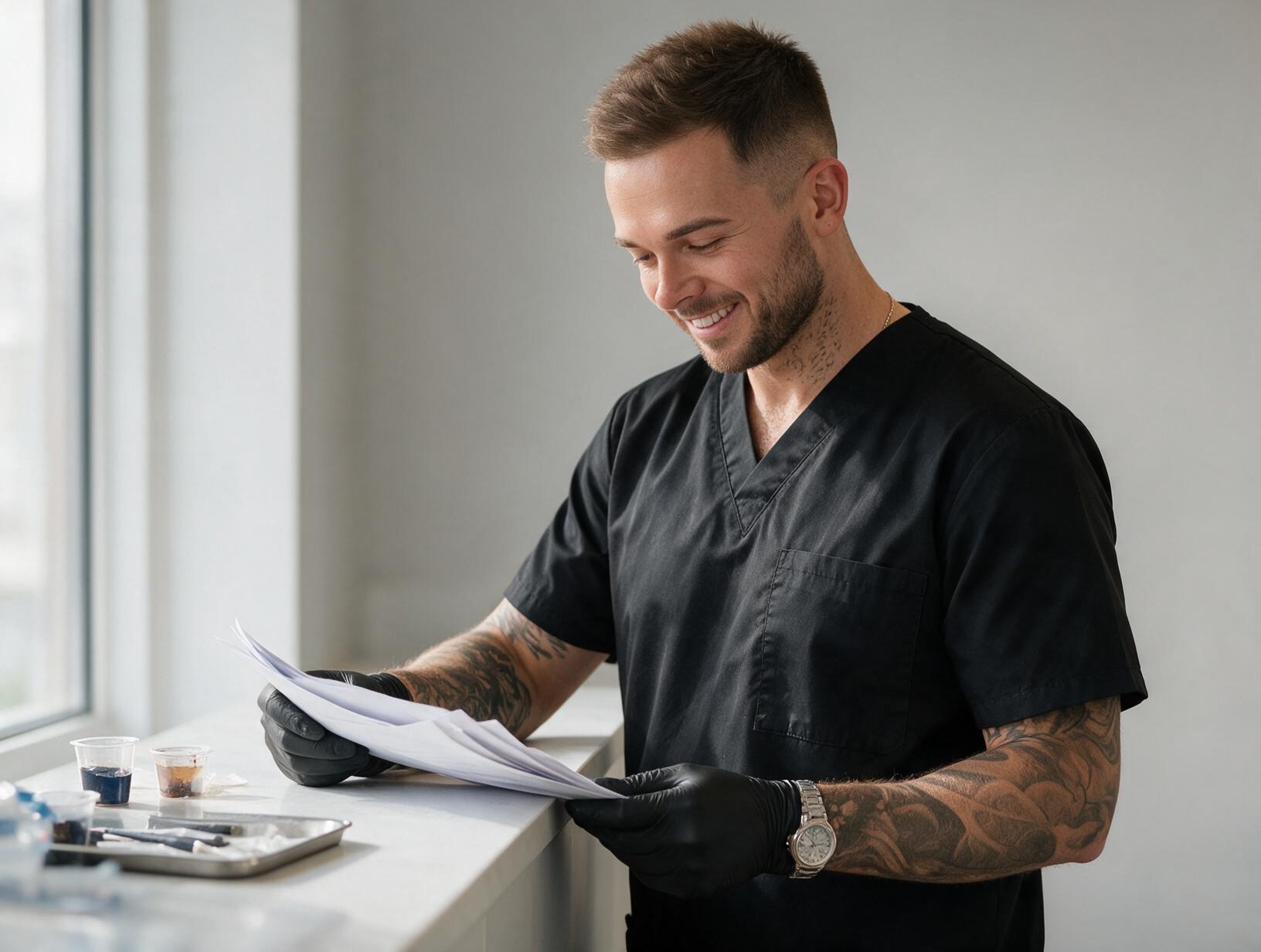
How long does SMP treatment take, and how far apart are sessions?
I need to allow the scalp to settle between appointments. The gap between sessions varies with the treatment area and how your skin heals, and I confirm it with you at consultation.
During healing, the colour can look stronger at first and then soften. Lightening is expected and is not automatically a sign that the treatment has failed. I review the healed appearance before deciding how much pigment to add next. This helps prevent over-saturation and gives me a better basis for matching the next layer.
After each session, keep the scalp dry for four days. Avoid washing, shaving, heavy exercise, sweating, hot showers and steam rooms during this early period, following the specific instructions I give you. Sun exposure should also be avoided for the same period. Aftercare affects how evenly the pigment heals.
Following the final appointment, I will give you specific guidance on swimming, saunas and steam rooms. Once the area has healed, protect the scalp with broad-spectrum SPF and resume normal grooming as I advise. Judge the final appearance after the scalp has had time to settle fully.
Does the treatment area change the number of sessions?
Yes. Male density SMP is applied between existing hairs, so the work must blend with your current hair colour, length and pattern, which is why the session count can differ. I usually recommend keeping remaining hair at a fine stubble length, trimmed every few days, so the natural hair and pigment sit together. More advanced loss may suit a fully shaved look.
Scars can be less predictable than healthy scalp because scar tissue may accept pigment differently. A narrow, mature, flat scar might need a focused course, while a wider or textured scar may need several visits to build an even appearance. The aim is to reduce contrast, not to pretend that the scar texture has disappeared.
Alopecia work also varies. Small patches may require fewer appointments, while wider areas or extensive loss may need three or four. SMP does not regrow hair or treat the cause of alopecia. It creates the appearance of follicle shadow and reduces the contrast between the scalp and surrounding hair or stubble.
Repair work needs especially careful planning. If previous pigment has spread, changed colour or been placed too deeply, adding more pigment may not be the right first step. I assess what is already present and explain whether repair, lightening, removal or a combination is realistic.
You can read more about SMP for alopecia and scar camouflage before your consultation.
What should I check before choosing an SMP practitioner?
Session count is only one part of the decision. I recommend looking closely at healed examples of the practitioner’s work, especially hairlines. A poor hairline can make otherwise careful treatment look unnatural, so ask to see how the work settles rather than relying only on fresh photographs.
Before treatment, the practitioner should discuss your expectations, hairline, skin and medical history, match the pigment to your current hair colour and mark the areas for agreement. You should disclose allergies and relevant skin conditions. Active scalp acne, eczema or psoriasis flare-ups, and a history of keloid scarring may mean SMP is unsuitable or should be discussed with a dermatologist first.
Also check that the practitioner has SMP-specific training and the relevant licensing and safety certification. The studio should be clean, with sterile packaged needles opened in front of you and appropriate barrier protection. If you would like to know more about where I work, you can find the studio details on the scalp micropigmentation services location page.
SMP is not a one-day answer to every type of hair loss. It is a cosmetic camouflage treatment that does not damage existing follicles or stimulate growth. With a realistic plan, gradual application and proper aftercare, the number of sessions can be chosen to suit the area rather than forced into a standard package.
If you are a practitioner interested in learning the craft, there is also information on SMP training courses.
If you would like to know how many sessions you are likely to need, you are welcome to book a consultation with me.
Frequently asked questions
Can SMP be completed in one session?
A very small area may need fewer appointments, but a full scalp is usually better built over multiple visits. Applying all the pigment at once makes it harder to assess healing and can increase the risk of an overly dark or blurred appearance. I decide after examining the area.
Will more sessions make SMP look darker?
Additional sessions add density and detail, but they should not simply make the scalp darker everywhere. I adjust dot spacing, shade and placement according to the healed result. A natural finish depends on controlled layering, particularly at the hairline and where pigment is being blended between existing hairs.
How long will my SMP results last?
SMP usually lasts several years before fading becomes noticeable, although longevity varies. Sun exposure, skin type, lifestyle, skin ageing and the type of hair loss can affect it. A touch-up may eventually be needed to restore definition. Using scalp SPF after healing can help protect the pigment over time.
Can I have SMP if I still have thinning hair?
Yes. Male density SMP is designed for men who prefer not to shave and want to reduce visible scalp between existing hairs. The remaining hair needs to be kept short enough for the pigment to blend naturally. I assess the pattern and density first, because SMP does not alter hair growth.
What happens if my scalp is still healing before the next session?
The next session should be delayed until the scalp has settled sufficiently. Continuing while there is ongoing irritation, scabbing or unexpected redness may interfere with the result. Follow the aftercare instructions and contact the practitioner if you have unusual discomfort or signs such as warmth, spreading redness, pus or fever.
Does SMP work on a scalp scar?
It can camouflage the colour contrast of some mature, flat scars, but it cannot remove the scar’s texture. Scar tissue may accept pigment differently from healthy scalp, so the treatment plan is assessed individually. Raised or keloid-prone scarring needs particular caution and may require advice from a dermatologist.
Should I shave my head before an SMP consultation?
Not necessarily. Seeing your current hair loss, remaining hair and scalp condition can help me assess the treatment properly. If you are considering male density SMP, I can explain the short hair length needed for blending. For more advanced loss, I can discuss whether a fully shaved appearance is more suitable.
Will SMP hide every sign of hair loss?
SMP reduces the contrast between your scalp and hair or stubble, but it does not restore hair or create real density. Some scalp showing through remains a normal part of a natural result. The final appearance depends on your hair loss pattern, skin, existing hair, scar tissue and the design agreed during consultation.